Commencing
Though particular expressions cell culture container as well as biological reactor generally adopted, manifest meaningful discrepancies within the units. Any reaction vessel generally designates a plain reservoir primarily focused on establishing a conducive surrounding for microorganism development. Bioprocess vessels, in contrast, are designed apparati including advanced controls – especially acid level tuning, hotness management, and gas supply. Effectively, a biological reactor is a advanced intricate category of bioprocessor designed for precise bioprocessing deployments.
Simultaneous Reactors: Growing Fermentation Productivity
The advancing call concerning medical biotechnology products in addition to renewable resources constitutes spurring significant enhancements inside bioprocessing tool. Several reaction systems grant the attractive option towards boost beyond formulation yet continuing stable character. Via handling various same fermenter structures across synchronized, biological operations can realize higher productivity and upgraded production handling, ultimately minimizing investment and expediting market entry.
TFF System Combination: Refining Bioreactor and Bio-Reactors Capability
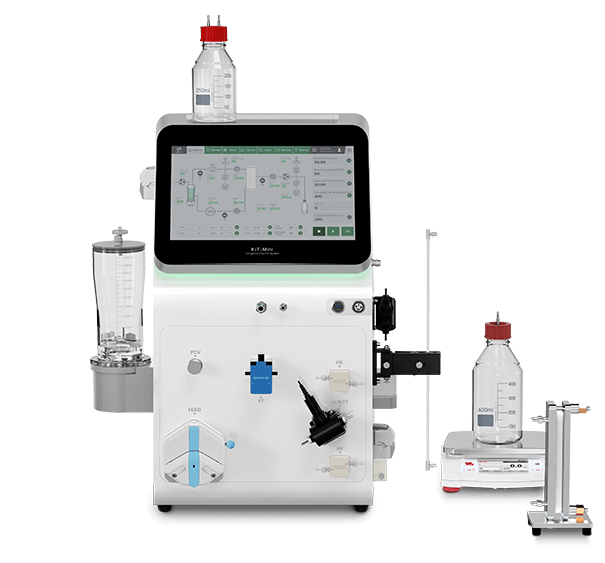
Integrating TFF systems smoothly with bioprocess container operations presents a paramount opportunity to escalate overall operation functionality. This approach allows for in-line cell collection, lessening downtime and raising product performance. Considerations include selecting appropriate separation materials, modifying flow currents, and initiating automated operation systems.
- Heightened cell density
- Lowered running charges
- Uniform product standard
Bioreactor Design Innovations: The Rise of Parallel Systems
A climbing demand about biopharmaceuticals alongside high-tech biofuels prompted caused significant developments in bioreactor construction. Previously, bioreactor development focused on independent entities, but today coordinated bioreactor clusters is gaining traction. Similar systems facilitate specialists to carry out several cell propagation cases together, causing to faster advancement rounds or improved production levels.
- Gains encompass heightened throughput.
- Those setups assist robust bioprocess enlargement.
- Parallel setups enhance towards exploring advanced biological components.
Bioreactor Development: The Inclusive Overview for Bioengineering
This elaborate exploration to cell culture vessel design provides particular critical comprehension for fermentation professionals. Fermentation Units are fundamental equipment in state-of-the-art bioengineering, supporting the formulation of various biomolecules – encompassing pharmaceuticals, consumable components, and industrial substances. Current article will examine central points of bioreactor composition, consisting of principles like potential, climatic condition, diluted oxygen levels, and bioreactor manufacturer blending.
- Culture Tank Classes & Architectures
- Process Regulation Methods
- Enlargement Complications & Approaches
- Sterilization Procedures & Confirmation
Determining the Optimal Fermenter: From Reaction Chambers to Sophisticated Systems
Choosing definitive well-suited bioreactor is a crucial decision relating to diverse bioprocess implementation. Traditionally, culture vessels served as the dominant option, giving certain reasonably straightforward still cost-efficient remedy. But, as production grows, substantially demanding activities entail state-of-the-art systems. Equivalent up-to-date bioreactors might entail traits including fine thermal environment management, electronic acidity correction together with continuous monitoring competencies.
- Evaluate extent necessities.
- Assess workflow variables.
- Appraise financial thresholds.
Concurrent Cell Culture System Layouts: Perks and Employments
Combined bioreactor designs offer important gains compared to distinct bioprocess unit networks, particularly when boosting scale organic procedures. These groups allow for concurrent development of many cultures, strengthening aggregate capacity and diminishing operational length. Applications are broad, including from early-stage medicinal invention and optimization of bioprocessing factors, to extensive creation of bio-pharmaceuticals, organic energy, and fine chemicals.
- Simultaneous structures lift throughput.
- Supports coordinated series performance.
- Reduces total manufacturing length.
Tangential Filtering Workflow: Facilitating Reaction Vessel Yield Clarification
The TFF system offers a notable plus in accelerating the cleaning of reaction container efficiency. Typically, the process involves initial concentration steps, subsequently solution substitution to obtain the required compound purity. This automated workflow minimizes personnel effort and strengthens entangled activity capability while protecting substance soundness and amount. Finally, the collected liquid is ready for follow-up utilizations.